Queer Places:
King's College London, Strand, London WC2R 2LS, United Kingdom
University of Cambridge, 4 Mill Ln, Cambridge CB2 1RZ
Marlborough College, Bath Rd, Marlborough SN8 1PA, United Kingdom
Harrow School, 5 High St, Harrow HA1 3HP, United Kingdom
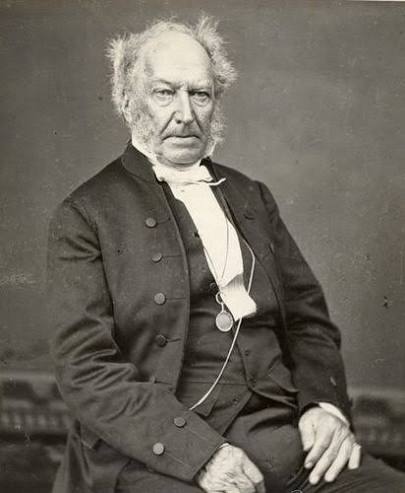 Edward Ernest Bowen (March 30, 1836 – April 8, 1901) was born on March 30, 1836, at Glenmore in County Wicklow, Ireland, the second son of Christopher Bowen, a clergyman who
served as perpetual curate of St Mary Magdalene in Southwark, Surrey. His elder brother, Charles Bowen, would go on to become a well-known judge and first-class cricketer,
while his grandson, I. M. B. Stuart, later achieved renown as an Irish rugby union international and broadcaster.
Edward Ernest Bowen (March 30, 1836 – April 8, 1901) was born on March 30, 1836, at Glenmore in County Wicklow, Ireland, the second son of Christopher Bowen, a clergyman who
served as perpetual curate of St Mary Magdalene in Southwark, Surrey. His elder brother, Charles Bowen, would go on to become a well-known judge and first-class cricketer,
while his grandson, I. M. B. Stuart, later achieved renown as an Irish rugby union international and broadcaster.
Bowen received his early education in England at Blackheath Proprietary School and King's College London, before entering Trinity College, Cambridge, as a pensioner on
February 1, 1854. An exceptionally gifted student, he matriculated in October 1854, became a scholar in 1856, and established himself as a prominent campus voice by serving
as president of the Cambridge Union the same year. Academically, he excelled across disciplines, sitting for both the Mathematical and Classical Triposes. He graduated as
4th Classic in 1858, earned his BA, and was elected a Fellow of Trinity College in 1859, later proceeding to his MA in 1861. During his university years, he was also
inducted into the elite, secretive discussion society known as the Cambridge Apostles. He corresponded with fellow Apostles,
Oscar Browning and Henry Sidgwick.
After a brief stint as an assistant master at Marlborough College in 1858, Bowen began his life's work at Harrow School in 1859, remaining there as an influential master
and housemaster of The Grove boarding house until his death in 1901. Challenging the grave formality characteristic of the Victorian era, Bowen believed deeply that boys
needed to feel at ease with their instructors and genuinely interested in their lessons.
His most enduring structural legacy at Harrow was the creation and leadership of the "modern side" from 1869 to 1893. By championing a curriculum that gave prominence to
modern history, science, and literature rather than relying solely on traditional Latin and Greek, he modernized public school education.
Beyond the classroom, Bowen left a permanent mark on Harrow's cultural life as a prolific writer and lyricist. He authored Harrow Songs and Forty Years On, an iconic
school song still sung today, to which an extra verse was later added to honor Winston Churchill. He also collaborated closely
with the Master in Charge of Music on numerous other school anthems. Politically active as a Liberal, he stood as the party's parliamentary candidate for Hertford in the
1880 general election, though he was defeated by the future Prime Minister Arthur Balfour.
A passionate advocate for physical education and recreation, Bowen was a versatile athlete and a pioneer of association football. He played a crucial role in the early
history of the sport, playing for the Wanderers and helping the side secure victory in the inaugural FA Cup final against the Royal Engineers in 1872, as well as repeating
the triumph in the 1872-73 FA Cup against Oxford University. He also represented England in the historic pseudo-international match against Scotland at The Oval in 1870.
His athletic pursuits extended far beyond football. He played first-class cricket for Hampshire against Sussex at Hove, was an accomplished mountaineer, skater, and
cyclist, and possessed remarkable endurance as a walker—notably hiking the 90 miles from Cambridge to Oxford in just 26 hours as an undergraduate.
Bowen never married. On April 8, 1901, while on a cycling tour in France, he died suddenly at the village of Moux while attempting to mount his bicycle, despite appearing
to be in perfect health. He was buried in Harrow, Middlesex. Cyril Norwood famously eulogized him as a man who had "kept the eternal boy alive within his own breast to the
very end."
The historical record regarding Edward Ernest Bowen's personal or romantic life is sparse, defined primarily by the
conventions of his era and his bachelor status. He never married, dying suddenly during a cycling tour in France in April 1901. Within Victorian public school and Oxbridge
environments—particularly elite networks like the Cambridge Apostles, to which he belonged—homosocial bonds and intense intellectual and emotional attachments among men were
common, sometimes encompassing romantic or homoerotic dimensions. However, specific documentation or personal correspondence confirming explicit same-sex romantic or sexual
relationships in Bowen's life remains largely unrecorded in mainstream biographical sources, leaving his private life largely obscured by the social norms and discretion of
the Victorian period.
References:
Other references:
- Oxford Dictionary of National Biography (ODNB) – Article on Edward Ernest Bowen (1836–1901) by [Anon.], revised by M. C. Curthoys (Oxford University Press).
- Dictionary of National Biography (DNB) – 1912 Supplement – Original biographical entry for Edward Ernest Bowen (Wikisource transcription).
- Alumni Cantabrigienses – Compiled by John Venn (Cambridge University Press, 1944), Vol. 1, p. 339.
- Edward Bowen: A Memoir – Written by W. E. Bowen (Longmans, Green, and Co., 1902).
- Studies in Contemporary Biography – James Bryce (Macmillan, 1903)—features a chapter/section reflecting on Bowen's life, character, and educational philosophies.
- Harrow School – Edited by E. W. Howson and G. T. Warner (1898)—includes early documentation, historical context, and Bowen’s own chapter on Harrow football.
- Journal of Sports History – J. A. Mangan, "Philathlete Extraordinary: A Portrait of the Victorian Moralist Edward Bowen", Vol. 9, No. 3 (1982), pp. 23–40.
- Athleticism in the Victorian and Edwardian Public School – J. A. Mangan (Cambridge University Press, 1981).
- A History of Harrow School, 1324–1991 – Christopher Tyerman (Oxford University Press, 2000).
- From the Privileged to the Professionals: The Early Years of the FA Cup – Graham Curry (Taylor & Francis, 2023).
- The Wanderers - Five Times F.A. Cup Winners – Rob Cavallini (Dog N Duck Publications, 2005).
- The Early FA Cup Finals and the Southern Amateurs – Keith Warsop (SoccerData, 2004).
- King's College Archive Centre, Cambridge – Letters from Edward Ernest Bowen to Oscar Browning (1866 onwards).
- Trinity College Library, Cambridge – Correspondence from Edward Ernest Bowen to Henry Sidgwick.
Support this project
This website is a passion project researched, developed, and funded entirely by me. If you find the content valuable and would like to help support the ongoing research and hosting costs, any contribution is deeply appreciated.
Thank you for keeping this independent resource alive!
My books on Amazon: Elisa Rolle's books
BACK TO HOME PAGE
